The Cure’s Rob Smith ‘Not goth’ // Whitby Goth Weekend ‘Future in discussion’ – DREADLINES

Hello, I’m Tim Sinister with the dreadlines today.

Robert Smith, crooner with original post-punk outfit The Cure, has been doing the rounds with various press outlets promoting his upcoming alt-rock extravaganza, the Meltdown festival in London. Time Out magazine pulled no punches and zeroed in on the goth tag that is the pure-black albatross around Bob’s neck.

None of this is news to anyone, but a few outlets ran with incredulous stories of goth’s ‘clown prince’ abandoning the scene. The Old Guard of goth bands have been distancing themselves from the admittedly cumbersome and limiting tag of goth for decades, ever since the British media decided they needed a neat box to fit in, and we needed a convenient word to annoy our parents with.
Siouxsie Sioux herself, formerly Bob’s lead singer when he played guitar with The Banshees, has always put a considerable distance between herself and the scene that idolizes her, saying

“At a signing the other day, someone asked me how it felt to be the queen of goth. I said, ‘That’s rather like being known as the Prince Regent of Fools.’ I hate all that.”

Peter Murphy of Bauhaus, producers of the most recognizable goth anthem ever, dismisses such associations just as easily. Andrew Eldritch waxes acerbic in that old familiar way and even uses asterisks to obscure the word goth on his website.

So, these articles expressing shock over Robert Smith disavowing goth are really missing the point. Being scorned by our musical heroes is, I think, peak goth.


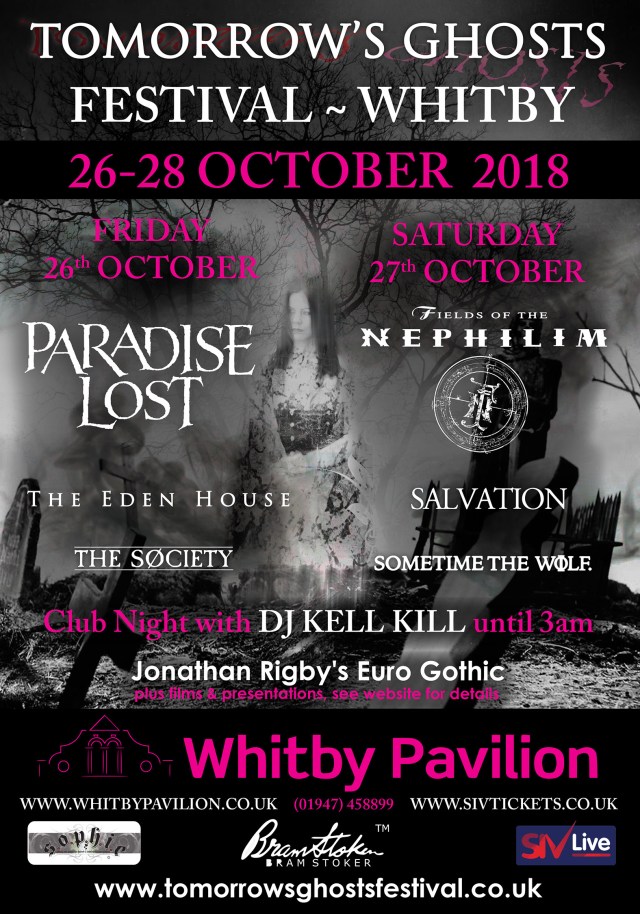
Another goth institution’s future seems uncertain, as the owners of the venue that hosts the biannual Whitby Goth Weekend are holding an open meeting to “discuss how SIV and the Whitby Pavilion can be a part of the cultural phenomenon that is the Goth Festival in Whitby.” Note they carefully step around using the phrase ‘Whitby Goth Weekend’ which has been copyrighted!

Discussion has been rife on various Facebook groups, and loyal fans are rallying around Top Mum Promotions, the company who have run the Whitby Goth Weekend event since 1994. There are concerns the venue owners are sidelining the original WGW promoters and will instead arrange a new festival to capitalize on the huge influx of visitors the seaside town receives twice a year.

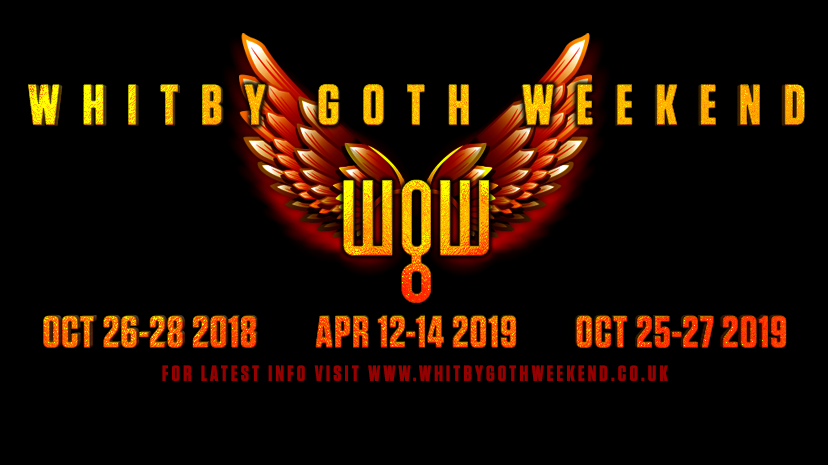
At the same time, it has been observed that the most recent WGW event made an unannounced move to the smaller Theatre inside the Pavilion building with an unusual line-up that wasn’t to all tastes – you can read my personal review here. No formal comment has been made by Whitby Goth Weekend, but the official Facebook page has published dates for October’s event, indicating they are going ahead as planned.

Could it be that the venue owners have decided they can run a more attractive event to push up attendance at the notoriously cavernous Pavilion? The Blogging Goth is headed over today to attend the 6pm meeting and will report back thereafter!

Posted in Uncategorized | Tagged , , , , , , , , | 4 Comments

The Addams Family – Animated Origins!

AddamsFamilyRebootCharacters

The Addams Family – Rebooted! Source (WP:NFCC#4), Fair use, Link

The live-action movies of The Addams Family remain some of my most cherished films, with a stellar cast, superb writing and gorgeous, gloomy design. So I applaud the decision regarding the 2019 adaptation to steer clear of the established canon from the Paramount Pictures releases in the early Nineties.

Originally linked to goth-stereotype director Tim Burton and pitched as a stop-motion animation, the latest update is The Addams Family will instead be fully animated and released by MGM. The casting has now been announced, with a bevy of talented Hollywood A-list actors stepping into the roles.


It’s wonderfully close to the ideal, live-action pairing of Oscar Isaac and Eva Green which a few people have pointed out would be aesthetically perfect. At least the art style is linked more closely to original creator Charles Addams’ 1930s look.

Nevertheless, the raw talent in this cast is impressive, and the production team seem experienced – even if joint directors Conrad Vernon and Greg Tiernan are better for helming horrible success Sausage Party.
We also have Pamela Pettler, the screenwriter of Burton’s Corpse Bride and 9, joint-producing a screenplay that promises to show the fabled first meeting of Gomez and Morticia, and the beginnings of The Addams Family.  The proposed face-off with a pastel-obsessed reality TV show host seems to hearken back to Joan Cusack’s character Debbie from 1993’s Addams Family Values – not to mention a sly jab at reality TV show hosts in general, even those that have stumbled into higher office!

Indeed, it’s a franchise that can’t seem to be left alone, with studios attempting multiple times to resurrect America’s spookiest family – but time will tell if lightning has struck, or if they should be left to rot in the graveyards of our minds. Snap-snap! 

Posted in Uncategorized | Tagged , , , | 1 Comment

World Goth Day 2018 in review

wgd-bannerHere’s hoping everyone celebrated World Goth Day 2018 on Tuesday – that’s the problem with tying it to a date, it moves through the week and is murder on those of us working! I’m especially resentful of everyone enjoying Wave-Gotik-Treffen in Germany, one of the world’s largest and most successful goth/deathrock/alt festivals.

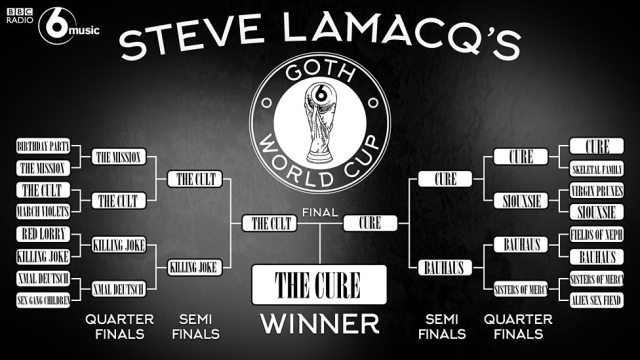
There were also regular complaints about it being held in the Spring, at least in the Northern Hemisphere where England certainly is basking in unexpected heat. You can blame the BBC (for that and much more!) who long ago held a goth-special on Radio 6 and prompted the whole thing. We’ll be carrying on the celebrations into the weekend here in my home of Newcastle, and I hope many other venues will be doing likewise.

noircastle

As always it was a blur of energy and action online, with the hashtag peaking early and staying consistently busy.
One major issue with goth is the isolation – you might be the only darkly-inclined one in your community, especially in larger countries, so it’s a helpful, hopeful reminder that a much wider family of cheerful weirdos are just like you and out there doing their thing! So kudos to every selfie, like and retweet that made it out.

I was also impressed with some articles coming out, especially those suggesting playlists – sorry guys, dressing goth but avoiding the tunes really isn’t legitimate. So kudos also to Louder magazine, with a playlist that namechecked some of the golden age artists but worked hard to look up the underrated gems and b-side classics that might get overlooked by a casual hack turning in a routine article. I fucking love Red Lorry Yellow Lorry, and that is a banger of a tune from them – much respect.

eldritch-amos

I was also impressed with the selection from the Jezebel team, who really trawled their memories and music collections for an esoteric selection of goth – and goth-adjacent – tunes for this article. Tori Amos is absolutely in the Dark Circle of goth-friendly musicians. Rumour has it she was on the verge of a duet with Eldritch but things fell through. I fear we missed out on a classic. Look at that couple! Von is almost smiling

The conventional media had their usual hit-and-miss approach that hinted at a lot of cribbing from Wikipedia and various goth FAQ sites.
I should definitely lead with the fine work done by Alice Cook of Metro UK (even if it is part of the dreaded Daily Mail empire) who took the time to speak to various learned personages of the goth scene; the co-founder of World Goth Day DJ Cruel Britannia, Leeds-based goth svengali Joel Heyes, and a certain Blogging Goth. I feel I’ve lost many points from my already in-debit goth account by smiling in that photo! I fully expect Robert Smith to descend from on high and break my neck beautifully for crimes against goth.

Mind you, at least I didn’t lead an article purporting to be about the history of goth with an image of Cradle of Filth lead singer Dani Filth and a stack of dressed-up weekenders at Whitby. As I commented on Twitter…

That was a very swift glance through social media on World Goth Day 2018. 2019 will be the tenth anniversary year, so get planning now on just how you’re gonna celebrate! We’ll see you there…

Posted in Uncategorized | Tagged , , , , , | Leave a comment

Happy World Goth Day 2018!

happy-goth

Posted in Uncategorized | Tagged , , | Leave a comment

Subcultures, Self-Harm and Psychology

Moral panics have been around as long as there was some outside force to blame for ‘ruining children’ rather than ignorance, neglect or wilful bloody-mindedness. Three years ago I was talking to The Today Programme on BBC Radio 4, about a brand new research study that linked alternative subcultures – like goth – with higher instances of self-harm and suicidal tendencies.

Fast-forward to April 2018, and a brand new research study has been released that links alternative subcultures – like goth – with higher instances of self-harm and suicidal tendencies. Experiencing some deja-vu? You should be – the 2015 study was one of the twelve that was selected and sifted for this uber review, looking to dig into whether or not there was a clear link between listening to Bauhaus, and wanting to take your own life or hurt yourself.

Photo Courtesy: Thomas Tadeus Bak

The bottom line to this comprehensive twenty page report, kindly provided to me by the very helpful University of Manchester’s Media Relations Department, and author Dr Peter Taylor?

It’s unclear.

After three years and eleven more studies there is still no firm conclusion that being a member of an alternative subculture will lead to an increased risk of self-harm and suicide. There is, again, some correlation but no indication of causation. Indeed, one theory advanced by the paper is that

“Young people who are vulnerable to low mood and self-harm may be attracted to groups with peers of similar difficulties who validate their experiences through music lyrics. This theory implies that a vulnerability to self-harm and suicide may be the cause of alternative subculture affiliation rather than a consequence.” (Emphasis mine). 

I contacted Dr Taylor through the Media Relations office, and he kindly clarified his thoughts to me, saying “We also note in the paper – and have commented in interviews – that these subculture[s] can be hugely positive for many people offering a place of support and belonging.”

And yet…

Even accounting for the idea that young people attracted to alternative subcultures might already be vulnerable to such behavior, Dr Taylor said “I think the data … does not fully explain away the relationship. For example even studies accounting for this sort of vulnerability still see an association.” 

Even after the books have been balanced, it seems inescapable that those who self-identify with goth, emo, punk or metal have an increased tendency towards self-destructive patterns.
Credit to Dr Taylor and his co-authors, one of his theories for contributing factors to the low mental-health and well-being of people in alternative subcultures, is their victimization. He mentions the tragic experiences of Sophie Lancaster, a thankfully isolated scenario, in particular.

Of course, those who ‘know better’ – like the mainstream media – would say that the associating with gruesome imagery and dolorous music is obviously depressing us. The research touches on the dark and foreboding appearance of alternative subcultures, pointing out that nobody has actually measured the correlation.

“It has also been suggested that the morbid aesthetic associated with certain alternative subcultures (e.g., Emo, Goth), results in increased exposure to images and themes linked to self-harm and suicide (Trnka et al., 2017), but again empirical support is
lacking.”

Indeed, one of my favourite lines that indicates a certain awareness amongst the researchers reads “the morbid and subversive imagery found within some alternative subcultures such as Goth can also be balanced with a sense of camp and self-irony”!

Well, they’re not wrong! I especially appreciate them titling the study “This Corrosion”…

I was very concerned about the media reporting of this study, as they inevitably go for the easiest conclusion regardless of whether it’s correct. I fired a few questions over to Dr Taylor, and he responded candidly and in detail for which I am very grateful.

[The author] correctly states “The public and media have at times, unhelpfully, demonised alternative subcultures and music as a cause of problems including self-harm.”
However as a result of there being no evidence for why members of alternative subcultures might be at a greater risk, the media reports on Dr Taylor’s study now seems to be leading readers to believe that merely being involved in a subculture may cause an increased risk of self-harm and suicide.

Dr Peter Taylor: This was a notable concern of mine (being someone who was and still is very much a fan of alternative music, and who grew up within these subcultures), and hence the reason we emphasised the way the media has at times been unhelpful.
In the paper we make it very clear that we are not suggesting that simply being a part of such subcultures leads to self-harm, and I have tried to make this very clear when speaking with journalists about this study.

My feeling is that it is important to identify groups that are at elevated risk of self-harm within our society, to better support those who might be struggling with these difficulties and raise awareness where this issue might otherwise go unnoticed. As noted in the paper the actual mechanism that links subculture affiliation to self-harm is still unclear and requires more research. There are various plausible mechanisms worth looking at – including the stress associated with being part of a minority group and victimisation some individuals face. We also note in the paper (and have commented in interviews) that these subculture[s] can be hugely positive for many people offering a place of support and belonging.
We have recently finished some further research trying to better unpick why young people in these subcultures might be more at risk of self-harm, but more work is still needed.


In the end I am reassured that research has again found out being into an alternative subculture like goth is not an inevitable prerequisite to mental health issues and harm. What it has done has identified a slightly higher correlation between these two tendencies, without establishing what links them! In the absence of a concrete conclusion, people will try to apportion blame to something they struggle to comprehend. I maintain a watchful eye on such research.

I’m also enthused by the work of other academics such as Professor Catherine Spooner, whose latest book is subtitled ‘Rise of the Happy Gothic’ in which she explores the goth subculture through texts and media that shed new light on hitherto unseen strands of this complex scene. Based more in cultural studies than psychology, it’s nevertheless an important and informed analysis of the subculture.

She also wrote an article in 2015 responding to the last time we were on this mournful carousel, so I am delighted to end on an academic conclusion I can strongly identify with.

“The image of the Goth teenager as a depressed loner is a pervasive one. But it is not one that Goths tend to choose for themselves. Goth subculture produces images of itself that are variously glamorous, romantic, whimsical, melodramatic, erotic, mundane – and above all humorous.”

Posted in Uncategorized | Tagged , , , , , | 3 Comments