Nearly 5,000 people are members of a Facebook community dedicated towards realizing a full documentary on the rich subcultural history of British Gothic music. The BBC has delivered similar programmes in this vein – such as Synth Britannia, which provoked the campaign.
 Instead, we received Goth at the BBC, televised with rather clumsy timing on Halloween. Perhaps they thought the children of the night would be about their business in the dark – or at least out buying a snakebite and black?
For those who saw it live, or caught it on catch-up, we were treated to a full display of some work experience researcher’s lunchtime trawl through the archives bin. Often cut-short segments from Top Of The Pops were tenuously linked by overlay captions with bad puns (and we know bad puns.)
There was no narration, no talking heads, and no interpretation of the convoluted and evolving history of Goth music within the UK, from the start of the Eighties to today’s, well, whatever it is. It was simply a quickly stitched-together show that resembles more a Youtube playlist than a documentary on one of the most enduring, most iconic British subcultures going.
Social media more or less exploded with scorn. One person unarguably in the know is veteran music journalist Mick Mercer, author of several key texts on the history and development of Goth music, and his scathing takedown is available in full here. He starts with an effort at journalistic detachment…
There’s a series of Goth-related things to review from the BBC output in their special little season, of which this is by far the flimsiest, a tiny gaggle of bands, mainly miming, from BBC shows and then other bands who shouldn’t even have been included.
…but by the end his feelings are made, well, pretty clear!
Fucking rubbish, basically. They may as well not have bothered for all the effort that went into this…
Keen to know more we reached out to the ‘Goth Britannia’ Facebook group that is at the centre of enthusiasm for a proper Goth documentary. It’s no longer in the hands of the original owner, but we made contact with him via Twitter.
* * *
Alan is in his early forties and lives in Glasgow, and recalls “getting an awareness of things around 1986, when older kids at the school I went to began to look the part, and I put two and two together with what had been appearing in the pages of Smash Hits (which I’d read for years) and Melody Maker / Sounds (which I’d just started getting into).”

TBG: Could you explain what prompted you to start the popular ‘Make a Goth Britannia’ group on Facebook?
Alan: Every time there was a “…Britannia” programme on BBC4 a few years ago, I wondered aloud what it would be like if there was a Goth Britannia one, seeing as how there had been virtually zero representation of the Goth scene in mainstream media. A very talented friend kindly knocked up the ‘flag’ logo and I started the page off just for a laugh to see what would happen.
The very first person to like the group was the music journalist Simon Price – who offered to present it if it got made!
TBG: Eventully, you decided to step back from running the Facebook group. What prompted that? How did it come into the hands of the new owner, ‘David’?
Alan: The whole Facebook thing started doing my head in, and I became very aware of over-sharing personal info with people that I’d met once three years ago at a party. So, I took the plunge and deleted my account – including the Goth Britannia page.
Fortunately for the project, Facebook doesn’t remove pages for a couple of weeks after they are deleted, so it didn’t disappear straight away. I shit you not, literally the next day I got an alert saying that I had a message from David – who is a TV producer. We exchanged e-mails about the future of the project, and I signed over the Facebook and Twitter accounts to him.
TBG: We should note, David Symonds who runs the Facebook group is not David Maguire, the producer of Goth at the BBC.
How did you feel when you heard BBC4 was going to make the documentary after all? Were you approached, did you have any involvement with Goth at the BBC?
Alan: I couldn’t believe it! Complete surprise. There had been a few media types who liked the community, but I didn’t realistically think that anything would happen. When I saw the press release about [BBC4’s] Gothic season, I thought that surely some of that was due to the campaign, but who knows?
I certainly wasn’t approached by anyone, but maybe David got approached via the Facebook page. No idea, I’m afraid.
TBG: Now that Goth at the BBC has been shown, how do you feel it went? There’s been a lot of complaint online about the choice of bands – how do you feel?
Alan: I was out on Friday night at a gig, so I didn’t see it until I got home and caught it on the iPlayer.
Having had a few years of people arguing about what constituted ‘Goth’ on the Facebook page, I knew that there would be complaints no matter what, but it was still a joy to see Specimen and Sex Gang Children on the BBC.
David [Symonds] mentioned to me that he’d approached the BBC a few years ago and was told the idea was “too niche”, so I’m guessing that some of the bands – like PJ Harvey, Shakespear’s Sister and Strawberry Switchblade – were put in to cater for the casual observer. Hardly seems far given some of the other stuff they’ve put out over the years, but there you go.
TBG: Is there anything specifically you’d have included?
Alan: If it had been up to me, I’d have picked different songs by some of the bigger bands like The Mission, The Cure and the Sisters, and maybe omitted a couple of acts in favour of Alien Sex Fiend and Clan of Xymox.
Still, it’s been an exciting ride. I’m glad I started [the Facebook group], and I can see they’re posting about the future, so who knows…?”
* * *
Inspired by Alan, we made contact with Simon Price, a veteran music journalist who amongst his many experiences wrote for Melody Maker and identified with the subculture proudly from the mid-Eighties to early Nineties.
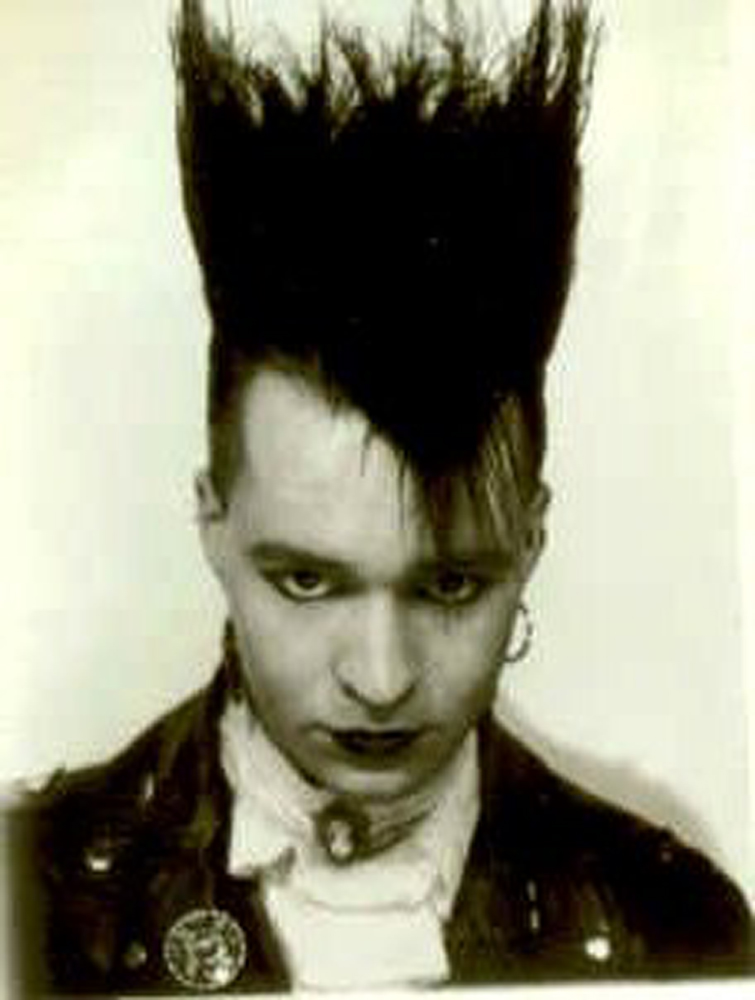 “I enjoyed Goth at the BBC as far as it went. By which, you can probably guess, I mean ‘not far enough’. It’s a shame the BBC’s entire Gothic season included serious, in-depth programming on other artistic disciplines, but only saw fit to devote a ‘jukebox’ clips show to Goth as a musical genre and youth subculture.
Some of the band’s included were just odd. Depeche Mode cross over stylistically to some extent with Goth, but they are basically a dark electro-pop act. PJ Harvey and Shakespeare’s Sister are, respectively, an indie artist and a pop group who happened to dabble in the noir for a short while.
That screen-time could have been devoted instead to so many others, and the Industrial and EBM subgenres probably deserved a look. Obviously this is contingent upon the BBC owning any footage of them, but they must have some of those acts on film, surely?
It ended with Marilyn Manson from ten years ago, and a caption to the effect that “Who knows? Maybe one day Goth will rise again”, which is a very peculiar thing to say when bands like Motionless In White and Black Veil Brides can fill huge venues and have massive fanbases.
I’m not necessarily endorsing those bands, and I realise 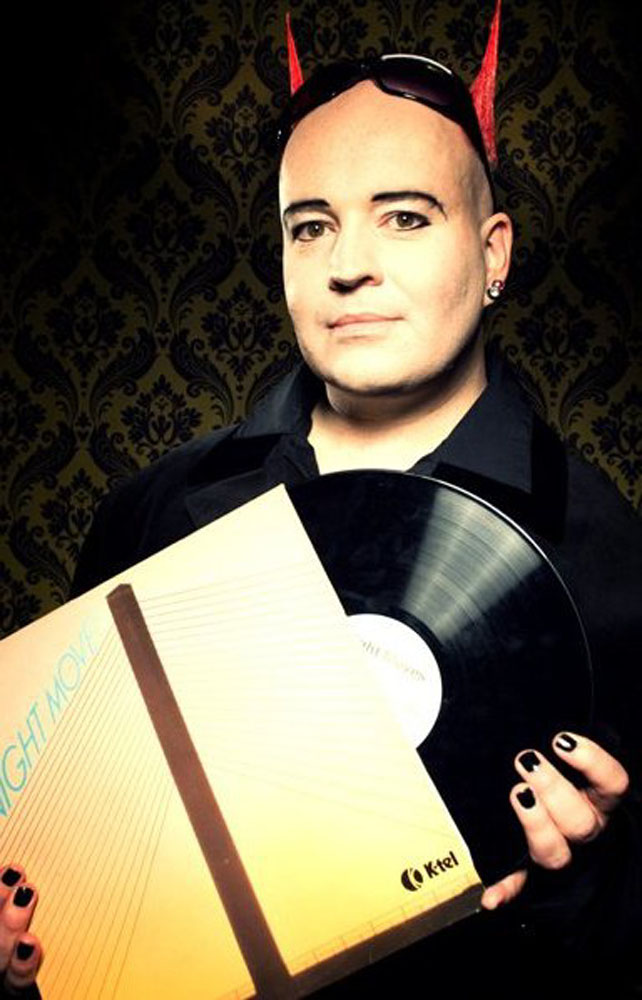 their sound is Metal rather than Goth, but that whole Metal-Goth crossover is another aspect that wasn’t acknowledged at all by Goth At The BBC. Goth has never really gone away, and in many senses is more popular than ever, so the 2004 cut-off was peculiar.
I want to remain optimistic, though, that this show is merely the first sign of the BBC acknowledging the cultural significance of Goth, and that a more serious, in-depth documentary on the Goth subculture will be forthcoming in the future. Someone really needs to make that programme. I sincerely hope it happens.”
* * *
So do we. Simon’s comments on the BBC speculating if ‘Goth’ will ever ‘rise again’ reminded us of the equally dismissive cover of the NME’s Originals series on Goth. In small writing at the bottom, some wry music hack added with a flourish…
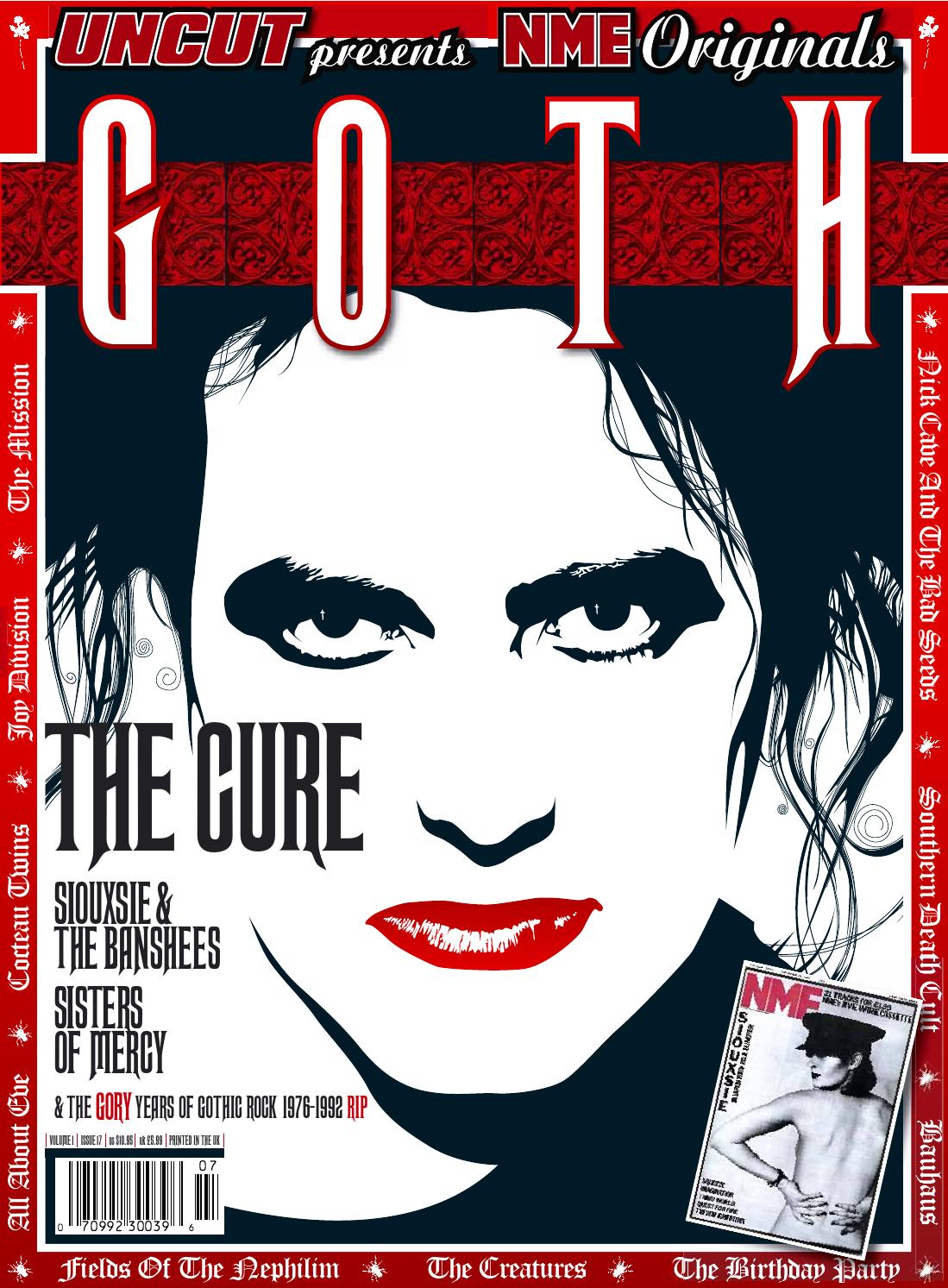
“The gory years of Gothic rock, 1976-1992 RIP”
Therein lies the problem. The media believes that not only do they describe the culture, they demarcate it, define it, distribute it and then dismiss it – and I am acknowledging the irony of a trained journalist and blogger stating the case!
The time is right to take the authority out of the hands of staid old monuments like the British Broadcasting Corporation or the New Musical Express and back where it belongs, with the original creators within the subculture. In composing this article we’ve found many people willing to be interviewed, and we suspect there are many more keen to contribute – the bands, journalists, promoters, writers, artists, and everyone else who pushed hairspray stocks through the roof during the Eighties.
We hope these people, with their personal experiences, will collaborate and create a far more fitting record of not just Goth history – but Goth present and future.